Advertisements
Here’s a wild stat that blew my mind: the average American household throws away about 30% of the food they buy. I used to be part of that statistic until I discovered the magic of making homemade vegetable broth from kitchen scraps. Now I save roughly $15 a month on store-bought broth, and honestly? My soups have never tasted better!
Let me walk you through how this whole zero-waste cooking thing changed my kitchen game forever.
Why Bother Saving Veggie Scraps?
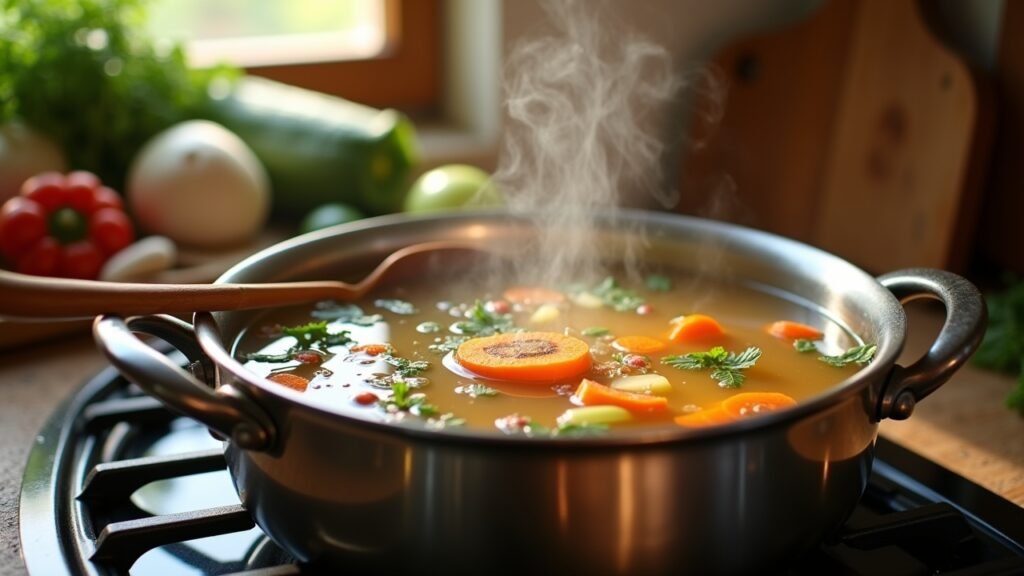
I’ll be real with you—I was skeptical at first. The idea of keeping onion peels and carrot tops seemed kinda gross. But then I made my first batch of scrap broth, and it was like a lightbulb moment.
Store-bought vegetable stock often contains sodium levels that would make your doctor wince. Plus, those boxes and cans ain’t doing our planet any favors. When you make DIY vegetable stock at home, you control everything—the salt, the flavor profiles, all of it.
The environmental impact is pretty significant too. According to the EPA’s guidelines on reducing food waste, composting and repurposing kitchen scraps can dramatically cut household waste.
What Scraps Should You Actually Save?
Okay, so here’s where I messed up big time during my first attempt. I threw literally everything into my freezer bag—including some brussels sprout trimmings. Huge mistake! That broth was bitter enough to make me cry.
Here’s what actually works for a flavorful vegetable broth:
- Onion skins and ends (these add beautiful golden color)
- Carrot peels and tops
- Celery leaves and ends
- Garlic skins and ends
- Mushroom stems
- Leek tops and roots
- Herb stems from parsley, thyme, and rosemary
- Tomato cores and skins
And what to avoid? Cruciferous veggies like broccoli, cabbage, and cauliflower will make your broth taste funky. Beets will turn everything pink—learned that one the hard way when I tried making gravy!
The Freezer Bag Method That Changed Everything
I keep a gallon-sized freezer bag in my freezer specifically for collecting scraps. Every time I’m prepping dinner and have vegetable trimmings, they go straight in. Simple as that.
Once the bag is full—usually takes me about two weeks—it’s broth-making time. The frozen scraps actually break down better during cooking, which was a happy accident I discovered.
My Go-To Recipe for Perfect Scrap Broth
After probably fifteen batches of experimenting, here’s what works best for me:
- One gallon bag of frozen vegetable scraps
- About 8-10 cups of water
- A bay leaf or two
- A few whole peppercorns
- Optional: a splash of soy sauce for umami depth
Dump everything in a large stockpot, bring to a boil, then let it simmer for about 45 minutes to an hour. Some folks go longer, but I find the flavors get muddy if you overdo it. Strain through a fine mesh strainer, and boom—you’ve got liquid gold.
For a visual walkthrough that really helped me nail the technique, check out this helpful video:
Advertisements
How to Make Vegetable Broth from Scraps – YouTube Tutorial
Storing Your Homemade Stock
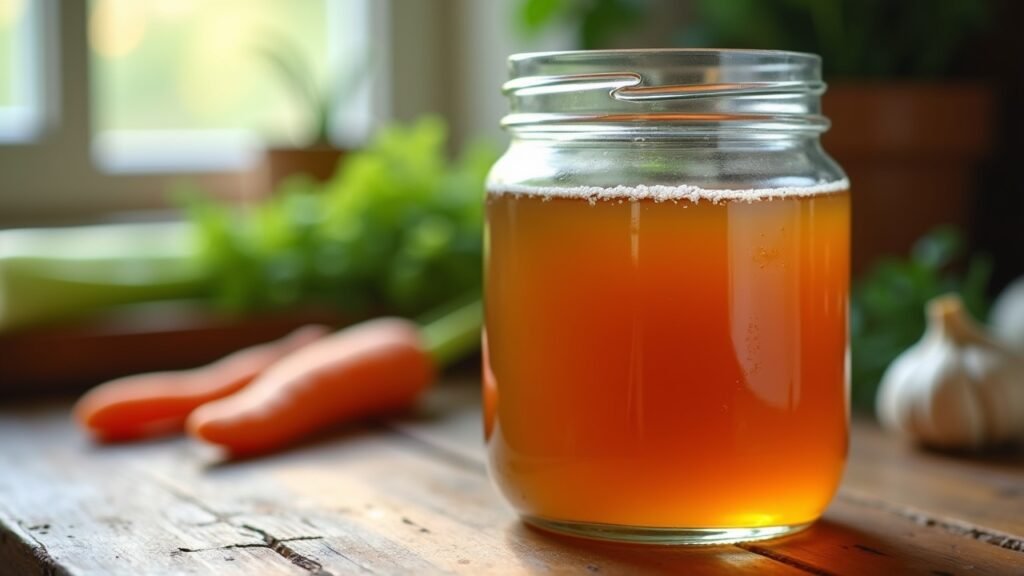
This part’s important, so pay attention. Your fresh vegetable broth will last about a week in the fridge. For longer storage, I freeze mine in ice cube trays first, then transfer the cubes to freezer bags.
Those frozen broth cubes are perfect for deglazing pans or adding flavor to rice. It’s been a total game-changer for my weeknight cooking.
Your Kitchen Scraps Are Waiting
Making vegetable broth from scraps isn’t just about saving money—though that’s definitely a nice perk. It’s about being more intentional with our food and reducing waste in a way that actually tastes amazing.
Start small with a freezer bag this week and see where it takes you. Experiment with different veggie combinations and make the recipe your own. Just maybe skip the brussels sprouts, yeah?
If you found this helpful, stick around and explore more sustainable cooking tips on Nook Method. We’ve got plenty more kitchen hacks waiting for you!