How to Remove Water Stains from Wood (Without Ruining Your Furniture)
Advertisements
Here’s a fun stat for you — nearly 90% of homeowners have dealt with water rings on their wooden furniture at some point. I know because I’m one of them! I’ll never forget the time I set a cold glass of lemonade right on my grandmother’s antique oak coffee table. No coaster. The white ring it left behind haunted me for weeks.
Water stains on wood are one of those annoying little problems that feel way bigger than they should. But here’s the good news — most of them are surprisingly easy to fix with stuff you probably already have at home. Let me walk you through what’s actually worked for me over the years.
First Things First: What Kind of Stain Are You Dealing With?
Before you grab anything, you gotta figure out whether you have a white stain or a dark stain. This matters a lot, trust me. I wasted a whole Saturday trying the wrong method once because I didn’t know the difference.
White water stains mean the moisture is trapped in the finish, not the actual wood. These are the most common and the easiest to fix. Dark water stains, on the other hand, mean the water has penetrated through the finish and into the wood fibers themselves — and those are a bit trickier.
If your stain is white or cloudy-looking, you’re in luck. Keep reading.
The Iron and Cloth Trick (My Personal Favorite)
Okay, this one blew my mind the first time I tried it. Lay a clean, dry cotton cloth over the water stain. Then set your iron to a low heat setting with no steam and gently press it over the cloth for a few seconds at a time.
The heat draws the trapped moisture out of the wood finish. I’ve seen white rings disappear in under a minute with this method. Just don’t leave the iron sitting in one spot too long or you’ll scorch the finish — learned that one the hard way on a side table.
Mayonnaise: Weird but It Works
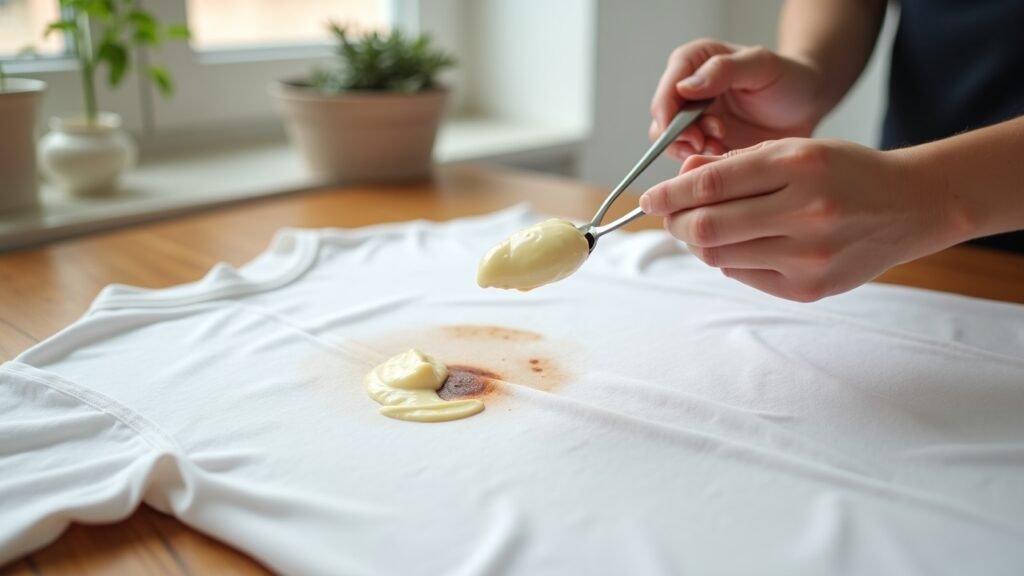
Yeah, I know. Sounds ridiculous. But smearing a generous layer of mayonnaise on a water stain and letting it sit for a few hours (or overnight) actually works really well on white water marks.
The oils in the mayo seep into the finish and displace the trapped moisture. I left some on my dining table overnight once, wiped it off in the morning, and the ring was completely gone. My wife thought I was losing it when she saw me spreading mayo on furniture at 11 PM, but hey — results speak for themselves.
Toothpaste for Stubborn White Rings
Non-gel white toothpaste is another solid option. You want the basic white stuff, not the fancy blue gel kind. Dab a little on the stain, rub it gently with a soft cloth in the direction of the wood grain, and wipe clean.
Some folks mix the toothpaste with a bit of baking soda for extra mild abrasion. This works because you’re lightly buffing the damaged finish layer. Just be gentle — you don’t want to rub through the entire finish.
Dealing with Dark Water Stains on Wood
Now if your stain is dark, we’re in different territory. Dark stains mean water has reached the bare wood and caused discoloration or even mildew. For these, you’ll usually need to strip the finish, treat the wood with oxalic acid or wood bleach, and then refinish the surface.
I had to do this on an old dresser I picked up at a flea market. It was a weekend project, not gonna lie. But the results were totally worth the effort. If you’re not comfortable with wood bleach, a professional furniture restorer can handle it pretty affordably.
Advertisements
Quick Prevention Tips
- Always use coasters and trivets — seriously, always
- Wipe up spills immediately before they soak in
- Apply a quality furniture wax or polish every few months to protect the finish
- Consider using placemats under plants and vases
Your Wood Furniture Deserves Better
Water stains on wood furniture feel like the end of the world in the moment, but they’re almost always fixable. Start with the gentlest method first and work your way up. And please — test any method on a hidden area before going all in on a visible surface.
Every piece of wood and every finish is a little different, so don’t be afraid to experiment. If you found this helpful, head over to the Nook Method blog for more practical home care tips that actually work. We’ve got plenty more where this came from!