Advertisements
How to Organize Small Bedroom Stuff Without Losing Your Mind
Here’s a stat that honestly blew me away — the average American spends nearly 2.5 years of their life looking for lost items. Two and a half years! When I read that, I looked around my tiny 10×10 bedroom and thought, “Yeah, that tracks.” I’ve lived in small bedrooms for most of my adult life, and let me tell you, learning to organize small bedroom stuff has been a journey full of mistakes, frustration, and eventually some real wins.
Whether you’re in a studio apartment, a cramped dorm room, or just got dealt a small master bedroom, staying organized in a tight space matters more than you think. It affects your sleep, your stress levels, and honestly your whole vibe. So let’s get into what’s actually worked for me.
Start by Decluttering — Seriously, Do It First
I know, I know. Everyone says this and it sounds boring. But here’s the thing — I once spent an entire weekend installing clever storage solutions only to realize I was just organizing junk I didn’t even need.
Before you buy a single bin or shelf, pull everything out and sort it into keep, donate, and trash piles. Be ruthless. That shirt you haven’t worn in two years? Gone.
Marie Kondo’s KonMari method gets a lot of hype, but honestly the core idea is solid — if it doesn’t serve a purpose or make you happy, it’s just taking up precious space in your small bedroom. Once I actually committed to decluttering, organizing became like ten times easier.
Use Vertical Space Like Your Life Depends On It
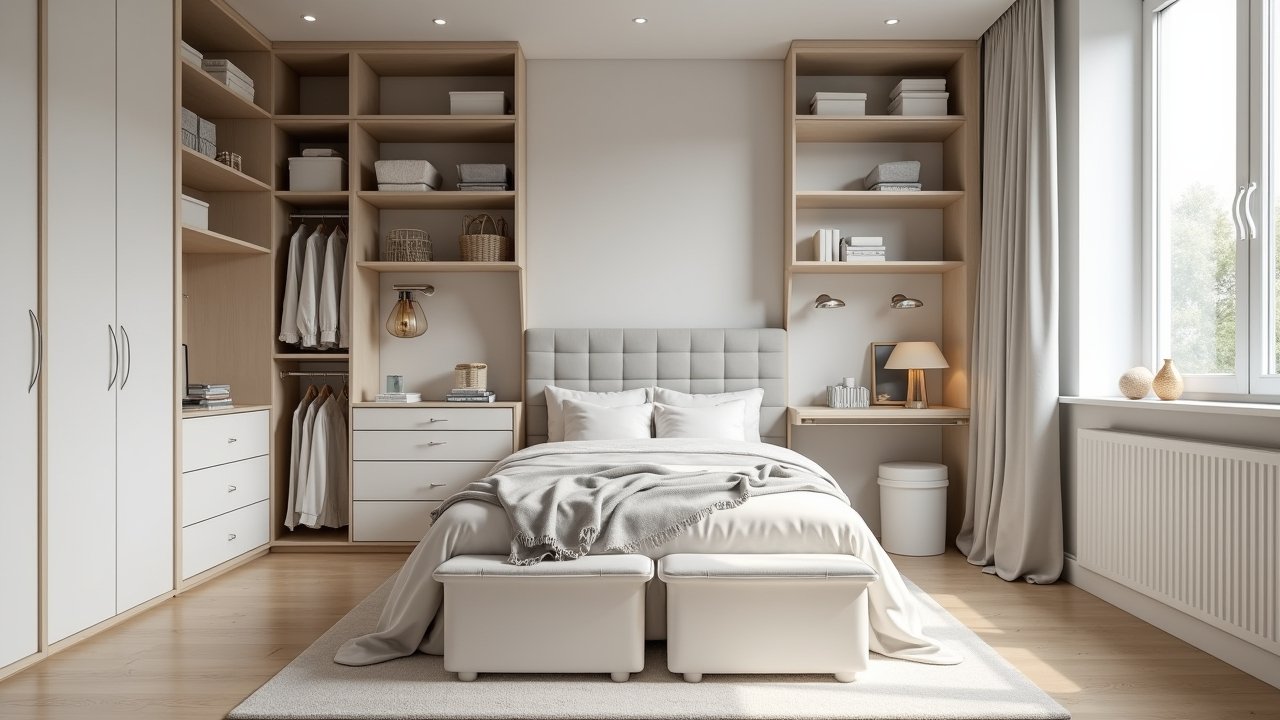
This was a total game-changer for me. When floor space is limited, your walls become your best friend. I’m talking floating shelves, over-the-door organizers, wall-mounted hooks — all of it.
I installed a set of three floating shelves above my bed for books and small decor, and suddenly my nightstand wasn’t buried under a mountain of stuff. You can find affordable options at places like IKEA’s wall shelf section.
Also, don’t sleep on the back of your bedroom door. An over-the-door shoe organizer can hold way more than shoes — I use mine for scarves, chargers, sunglasses, and random small bedroom stuff that used to just float around with no home.
Maximize Under-Bed Storage
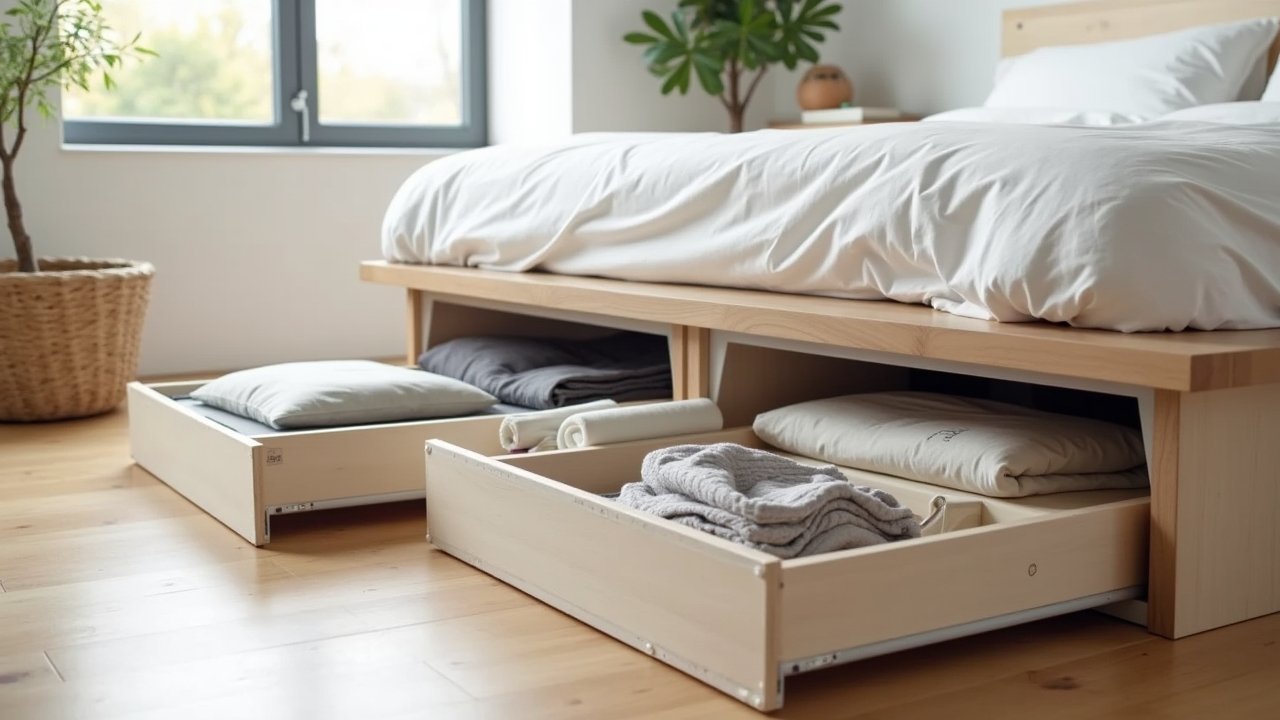
For years I just shoved random things under my bed and called it a day. Spoiler alert: that’s not organization, that’s hiding. When I finally got some proper under-bed storage bins with lids, it was like discovering a whole extra closet I didn’t know I had.
Rolling bins work great if you need to access things frequently. Flat vacuum-seal bags are perfect for seasonal clothing or extra bedding. Just make sure you label everything — future you will be so grateful.
Small Bedroom Closet Hacks That Actually Work
My closet is laughably small. Like, barely-fits-a-winter-coat small. So I had to get creative with closet organization to make it functional.
- Use slim velvet hangers instead of bulky plastic ones — you’ll fit way more clothes.
- Add a second hanging rod below the first one for shorter items like shirts and skirts.
- Use stackable shelf dividers to keep folded clothes from turning into a messy pile.
- Stick a small set of drawers or cubbies on the closet floor for accessories and small items.
One trick I stumbled on by accident was using shower curtain rings to hang tank tops and scarves. Sounds weird but it works beautifully and costs almost nothing.
Advertisements
Create Zones to Keep Things Tidy
This is something I learned from teaching, actually. In a classroom, everything has a designated area — and the same logic applies to a small bedroom. I created little “zones” for different activities: a sleep zone around the bed, a getting-ready zone near the closet, and a small work zone by the window.
When every item has a specific spot it belongs to, tidying up takes five minutes instead of an hour. It sounds simple because it is. The hard part is just sticking with it.
Your Small Space, Your Rules
Look, organizing small bedroom stuff isn’t a one-size-fits-all situation. What works in my cramped little room might not work perfectly in yours, and that’s totally fine. The important thing is finding systems that fit your lifestyle and actually maintaining them.
Start small, be patient with yourself, and don’t be afraid to experiment. And if you’re looking for more practical tips on making the most of tight spaces, head over to Nook Method — we’ve got plenty more where this came from!