
Advertisements
How to Deep Clean Your Couch and Actually Get Rid of Those Funky Odors
Did you know that your couch can harbor up to hundreds of different types of bacteria — not to mention years’ worth of trapped smells? Yeah, that “mystery odor” in your living room might just be your sofa saying hello. I learned this the hard way after my dog decided our couch was his personal napping throne for three straight years.
Deep cleaning a couch to remove odors isn’t just about making things smell nice — it’s about creating a healthier space for your whole family. And honestly? It’s not as hard as it sounds. Let me walk you through what’s worked for me.
Start With the Basics: Vacuum Everything First
Before you grab any cleaning solution, vacuum the entire couch. I mean every single cushion, crevice, and corner. Use the brush attachment to loosen up debris, pet hair, and crumbs that have basically made a new home in your fabric.
This step is often skipped, and that’s a big mistake. If you apply any liquid cleaner on top of loose dirt, you’re basically making a muddy mess. Trust me — I did that once and spent an extra hour trying to fix it.
- Remove all cushions and vacuum both sides
- Use a crevice tool for the deep corners
- Don’t forget the back and sides of the couch
- Shake out removable covers outside if possible
Baking Soda Is Your Best Friend for Odor Removal
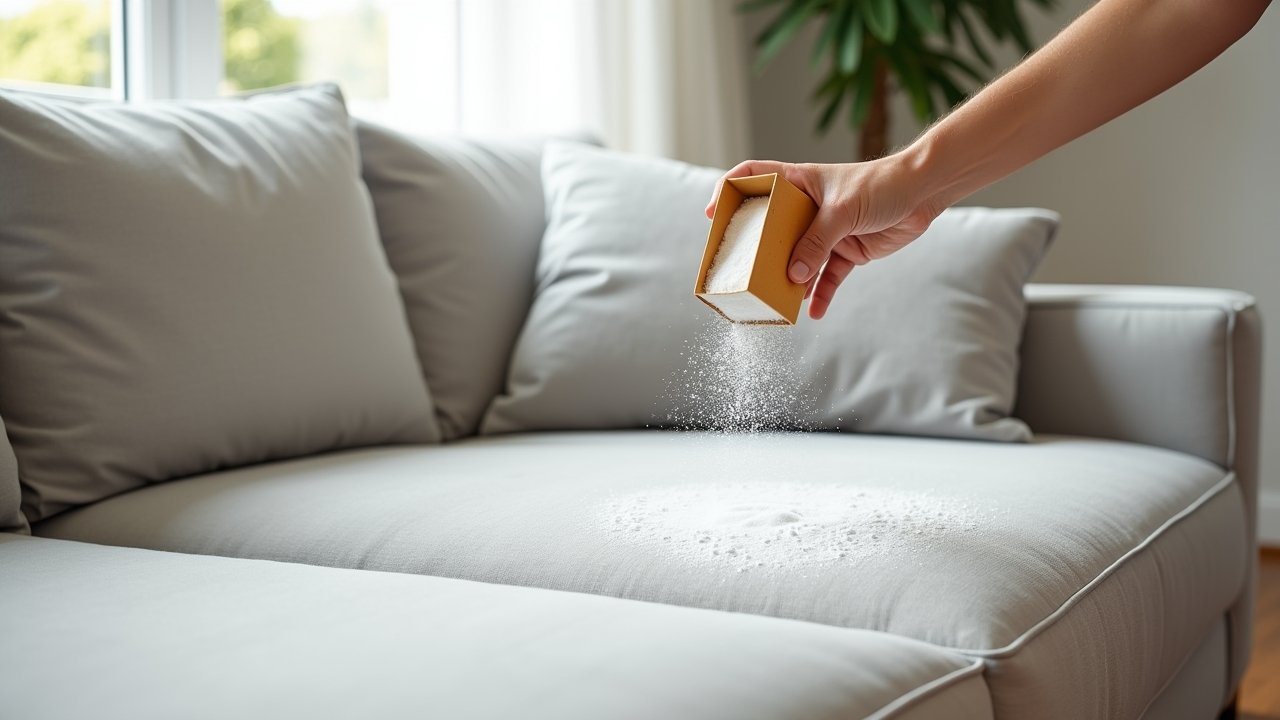
Once the vacuuming is done, it’s time to bring out the MVP of odor removal — baking soda. Sprinkle it generously over the entire surface of your couch. Like, don’t be shy about it.
Let it sit for at least 20 to 30 minutes, but honestly, if you can leave it overnight, even better. Baking soda works by neutralizing acidic and alkaline odor molecules, rather than just masking them. After it does its thing, vacuum it all up thoroughly.
This alone made a noticeable difference on my couch. The pet smell that I thought was permanent? Gone. Well, mostly gone — but way better than before!
Deep Cleaning the Fabric: What to Use and How
Now for the actual deep clean. Before you go spraying anything, check the tag on your couch cushions. There’s usually a letter code — W means water-based cleaners are safe, S means solvent-based only, and WS means both are okay. If it says X, only vacuuming is recommended.
For most fabric couches, a simple DIY solution works great. Mix one tablespoon of dish soap with two cups of warm water and a tablespoon of white vinegar. Apply it with a soft cloth using gentle circular motions — don’t drench the fabric, just dampen it.
- Always do a patch test on a hidden area first
- Blot, don’t scrub — scrubbing can damage fabric fibers
- Use a clean microfiber cloth for best results
- Open windows or use a fan to help the couch dry faster
Tackling Stubborn Odors With an Enzyme Cleaner
If you’ve got pet accidents or really stubborn smells baked into the cushions, a regular cleaner might not cut it. That’s where enzyme-based cleaners come in. Products like enzyme upholstery cleaners actually break down the organic compounds causing the smell at a molecular level.
Spray it on, let it sit according to the product instructions, and let it air dry. I used this method on a cushion that smelled like old milk — long story — and it genuinely worked. It was one of those small victories that felt way bigger than it probably should have.
Keep It Fresh: Maintenance Tips Between Deep Cleans
Okay, so you’ve done the deep clean. Awesome! But maintaining that freshness is just as important. A little effort every week goes a long way.
Advertisements
- Sprinkle baking soda monthly and vacuum it up
- Use a fabric refresher spray like Febreze between cleanings
- Wash removable cushion covers every few weeks
- Keep pets off the couch if possible — or use a washable cover
- Air out the room regularly to prevent moisture buildup
Your Couch Deserves Some Love Too
A clean, fresh-smelling couch makes a huge difference in how your whole living room feels. Honestly, it’s one of those things you don’t realize how much it matters until you actually do it. Plus, regular upholstery cleaning can even extend the life of your furniture — so it’s a win-win.
Just remember, always check your fabric codes, test before applying anything widely, and be gentle with your materials. Your couch will thank you for it. If you found this helpful and want more practical home cleaning tips, head over to the Nook Method blog — there’s a ton of great stuff there to help you keep every corner of your home feeling its best!