Advertisements
How to Clean Grease Off Kitchen Cabinets (Without Losing Your Mind)
Here’s a fun fact that honestly grossed me out — the average kitchen accumulates a sticky layer of grease on cabinets within just a few weeks of regular cooking. I learned this the hard way when I moved my fridge and saw the cabinet next to it looking like it had been glazed with cooking oil. Yikes!
If you cook at all, grease buildup on kitchen cabinets is basically inevitable. And trust me, the longer you ignore it, the harder that sticky grime is to remove.
So let me walk you through what’s actually worked for me after years of trial and error. Some of these methods I stumbled onto by accident, and a couple were flat-out disasters before I figured things out.
Why Grease Builds Up on Cabinets in the First Place
Every time you fry, sauté, or even boil something, tiny grease particles become airborne. They float around your kitchen and land on every surface — especially your cabinets above and near the stove. Over time, dust sticks to that oily residue, and you end up with that yellowish-brown gunk that feels impossible to clean.
I used to think my cabinets were just getting old and discolored. Nope. It was layers of cooking grease mixed with dust, and I’d been staring at it for months without realizing what it was.
The Dish Soap Method — Start Here
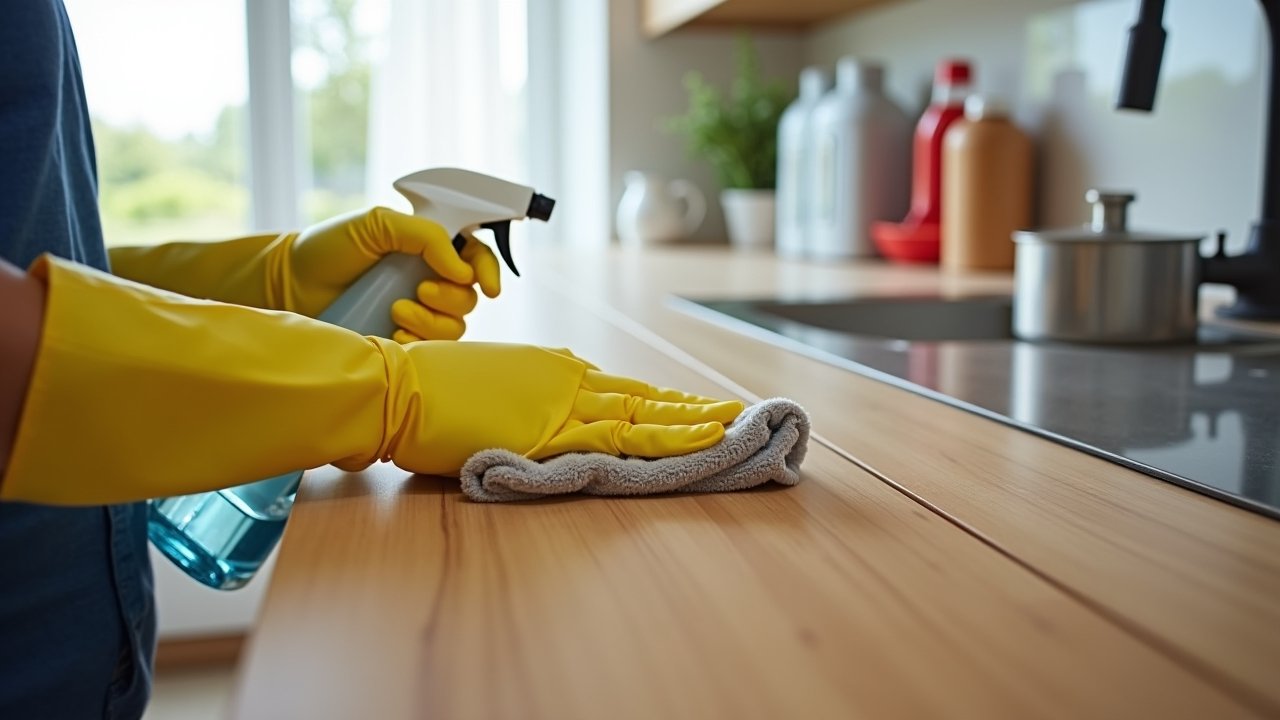
Honestly, for light grease on kitchen cabinets, regular dish soap works surprisingly well. I mix a few drops of Dawn dish soap with warm water in a spray bottle, spritz the cabinet doors, and wipe with a microfiber cloth.
The key is warm water, not hot. Hot water can damage certain wood finishes, and I learned that one the hard way on my oak cabinets. Also, always wipe in the direction of the wood grain if you’ve got wooden cabinets.
Baking Soda Paste for Stubborn Greasy Cabinets
When dish soap isn’t cutting it, baking soda is your best friend. I make a thick paste with about two parts baking soda to one part water and apply it directly to the greasy spots.
Let it sit for a couple minutes, then gently scrub with a soft sponge. Don’t use anything abrasive — I once grabbed a steel wool pad thinking I was being efficient and scratched the heck out of my cabinet finish. Not my proudest moment.
This method is great for removing heavy grease buildup around cabinet handles and edges where your fingers touch constantly.
Vinegar — The Kitchen MVP
White vinegar is a natural degreaser that I swear by. Mix equal parts vinegar and warm water in a spray bottle, and you’ve got a solid cabinet cleaning solution. It cuts through sticky grease like nobody’s business.
One thing though — don’t use vinegar on natural stone countertops nearby, because it’ll etch the surface. I keep a separate rag just for the cabinets so I don’t accidentally wipe down my granite with it. The folks at Bob Vila have some great additional tips on this if you want to go deeper.
Advertisements
Oil-Based Cleaners for Wooden Cabinets
This one sounds counterintuitive, but vegetable oil mixed with baking soda actually works wonders on wood cabinets. The oil helps dissolve the grease while the baking soda provides gentle abrasion.
I was skeptical the first time a friend suggested this. But after trying it on a small section near my stovetop, I was genuinely shocked. The greasy film came right off and the wood looked refreshed.
How Often Should You Degrease Kitchen Cabinets?
- Cabinets near the stove — wipe down weekly
- Cabinets away from the cooking area — monthly is fine
- Cabinet hardware and handles — every couple of weeks
- Deep cleaning with baking soda or vinegar — every 2-3 months
Staying on top of it makes a massive difference. Prevention is genuinely easier than trying to scrub off six months of accumulated grease.
Your Cabinets Will Thank You
Look, cleaning grease off kitchen cabinets isn’t glamorous work, but it keeps your kitchen looking fresh and extends the life of your cabinetry. Start with the gentlest method first and work your way up to stronger solutions only if needed. And always test a small hidden area before going all in on any cleaning product.
Got more kitchen cleaning challenges? Head over to Nook Method for practical tips that actually work — no fluff, just real advice from real experience.