
Advertisements
Here’s a fun fact that totally grossed me out: your dishwasher can harbor more bacteria than your toilet seat. Yeah, I know. I learned this the hard way when I opened mine one day and was hit with a smell that can only be described as “swamp creature meets old lasagna.”
Look, I always assumed my dishwasher was self-cleaning. I mean, it’s literally filled with hot water and soap every day, right? Wrong. So wrong. After years of neglect, I finally figured out how to clean a dishwasher properly, and honestly, it’s been life-changing.
The Signs Your Dishwasher Needs Some TLC
Before we dive in, let’s talk about how you even know your dishwasher is dirty. Sometimes it’s obvious—like when there’s visible gunk or that funky odor I mentioned. But other times, it’s sneakier than that.
- Your dishes come out with a weird film or residue
- There’s standing water at the bottom after cycles
- You notice food particles stuck in random places
- The interior looks cloudy or has mineral buildup
I ignored these signs for way too long. Don’t be like me.
Step One: Clear Out the Drain and Filter
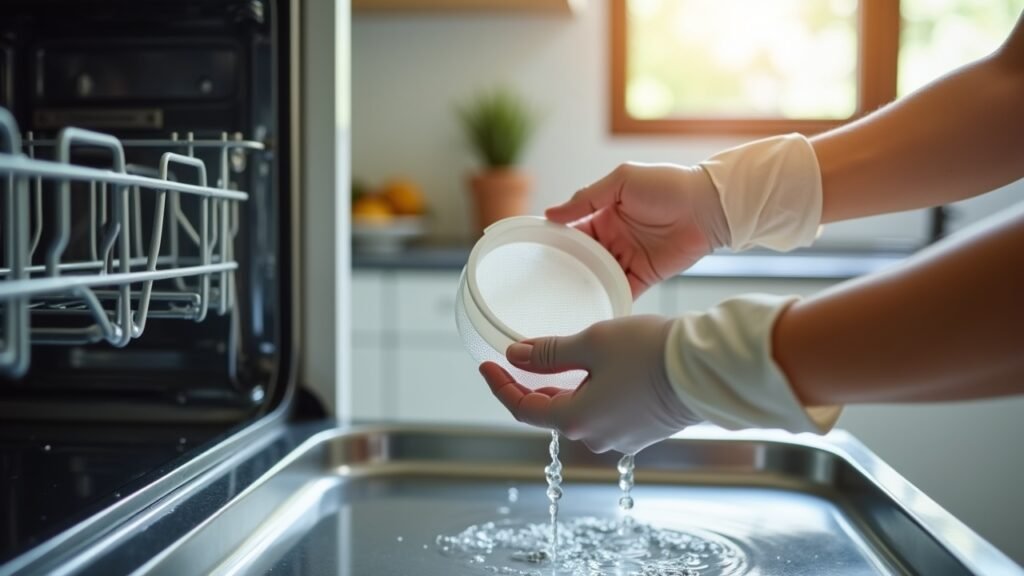
This is where I made my biggest mistake. I didn’t even know my dishwasher HAD a filter until like three years into owning it. Turns out, there’s usually a cylindrical filter at the bottom that catches food debris, and mine was absolutely disgusting.
To clean it, just twist and pull it out. Rinse it under hot water and use an old toothbrush to scrub away the buildup. According to Whirlpool’s maintenance guide, you should be doing this monthly. Monthly! I was doing it never-ly.
While you’re down there, check the drain area for any chunks of food or debris. I once found a piece of glass hiding in mine, which explained why my dishes weren’t getting clean.
The Vinegar Trick That Actually Works
Okay, so this is the easiest dishwasher cleaning hack ever. Grab a cup of white vinegar and place it upright on the top rack of your empty dishwasher. Run a hot water cycle, and let the vinegar work its magic.
The acetic acid in vinegar breaks down grease, removes hard water stains, and eliminates odors. It’s basically a spa day for your appliance. I do this every couple of weeks now, and the difference is wild.
For a visual walkthrough, this YouTube video from Clean My Space shows the whole process really clearly. Sometimes seeing it done helps more than reading about it, you know?
Baking Soda: The Secret Weapon
After the vinegar cycle, I like to follow up with baking soda. Just sprinkle about a cup across the bottom of the dishwasher and run another short hot cycle. This deodorizes everything and leaves the interior looking way brighter.
There was a period where I tried using both vinegar and baking soda at the same time. Big mistake. They just neutralize each other and you get a fizzy mess that doesn’t actually clean anything. Science, man.
Don’t Forget the Door Edges and Seals
Here’s a spot people always miss—the rubber gasket around the door. Mold and mildew love hanging out there because it stays damp. I use a damp cloth with a little dish soap to wipe it down.
Advertisements
The edges of the door don’t get reached by the spray arms during cycles, so gunk builds up there too. A quick wipe every week keeps things fresh and prevents that musty smell from creeping back.
Deep Cleaning for Stubborn Buildup
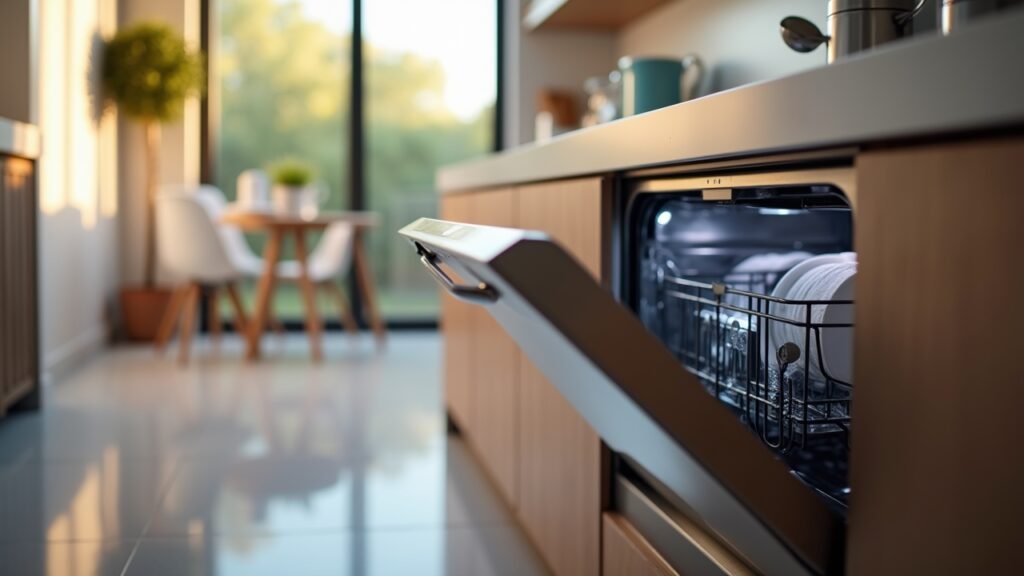
Sometimes vinegar and baking soda ain’t gonna cut it. If you’ve got serious limescale or mineral deposits, you might need something stronger. Commercial dishwasher cleaners like Affresh tablets work really well for deep cleaning.
Just pop one in an empty dishwasher and run a cycle. I use these maybe once a month when things look particularly crusty. They’re especially helpful if you have hard water like I do.
Your Dishwasher Will Thank You
Honestly, once I started maintaining my dishwasher regularly, everything improved. My dishes actually sparkle now. The weird smell is gone. And I’m pretty sure the appliance will last way longer because it’s not working overtime fighting through grime.
Start with the easy stuff—the vinegar and baking soda method—and work your way up from there. Every kitchen is different, so adjust based on what your dishwasher needs. And hey, if you found this helpful, check out more cleaning tips and home hacks over at Nook Method. We’ve got tons of stuff to make your life a little easier!